Why listed status blocks most Bristol demolition
Few planning questions stop a demolition job faster than listed status. An owner who assumes that a building can be taken down because it is old, derelict or inconvenient can find that the work is a criminal offence, not merely a delayed application. In Bristol, as in every part of England, the protection given to a listed building is strong, and it does not disappear because the owner has bought the property cheaply or because a contractor has offered a low price. This guide explains what listed building consent covers, why structures within the curtilage matter, what evidence councils expect before they allow loss of a building, and what happens when work goes ahead without consent.
The rule is simple to state. A listed building cannot be demolished, in whole or in part, without consent. The difficulty lies in the details: what counts as the building, what the consent process asks for and how long a refusal can hold up a programme. Those details should be settled before any quote is requested, because a quote for a building that cannot lawfully be taken down is worth nothing.
What the law prohibits
The rule begins in section 7 of the Planning (Listed Buildings and Conservation Areas) Act 1990. Demolishing a listed building, in whole or in part, or altering or extending it in a way that affects its character, requires the consent the Act provides for. The duty reaches beyond the owner: a contractor whose crew starts stripping a listed building on instruction is also exposed, because the prohibition applies to whoever carries out the works.
The consequences of getting this wrong are serious. Section 9 of the same Act states that a person who contravenes section 7 is guilty of an offence. On conviction in the Crown Court the maximum penalty is two years' imprisonment, an unlimited fine or both, and the court must take account of any financial benefit the offender gained or expected. That is a criminal matter set by the Act itself, separate from any planning enforcement action, and the only defence is narrow: the works must have been urgently necessary for safety, health or the building's preservation, it must not have been practicable to achieve that by repair or by temporary support or shelter, the works must have been limited to the minimum measures immediately necessary, and the council must have been given written notice justifying them in detail as soon as reasonably practicable. Owners who believe a building may be listed should check before any work is planned, because the offence does not depend on whether the building was marked on a map.
Curtilage buildings and what they include
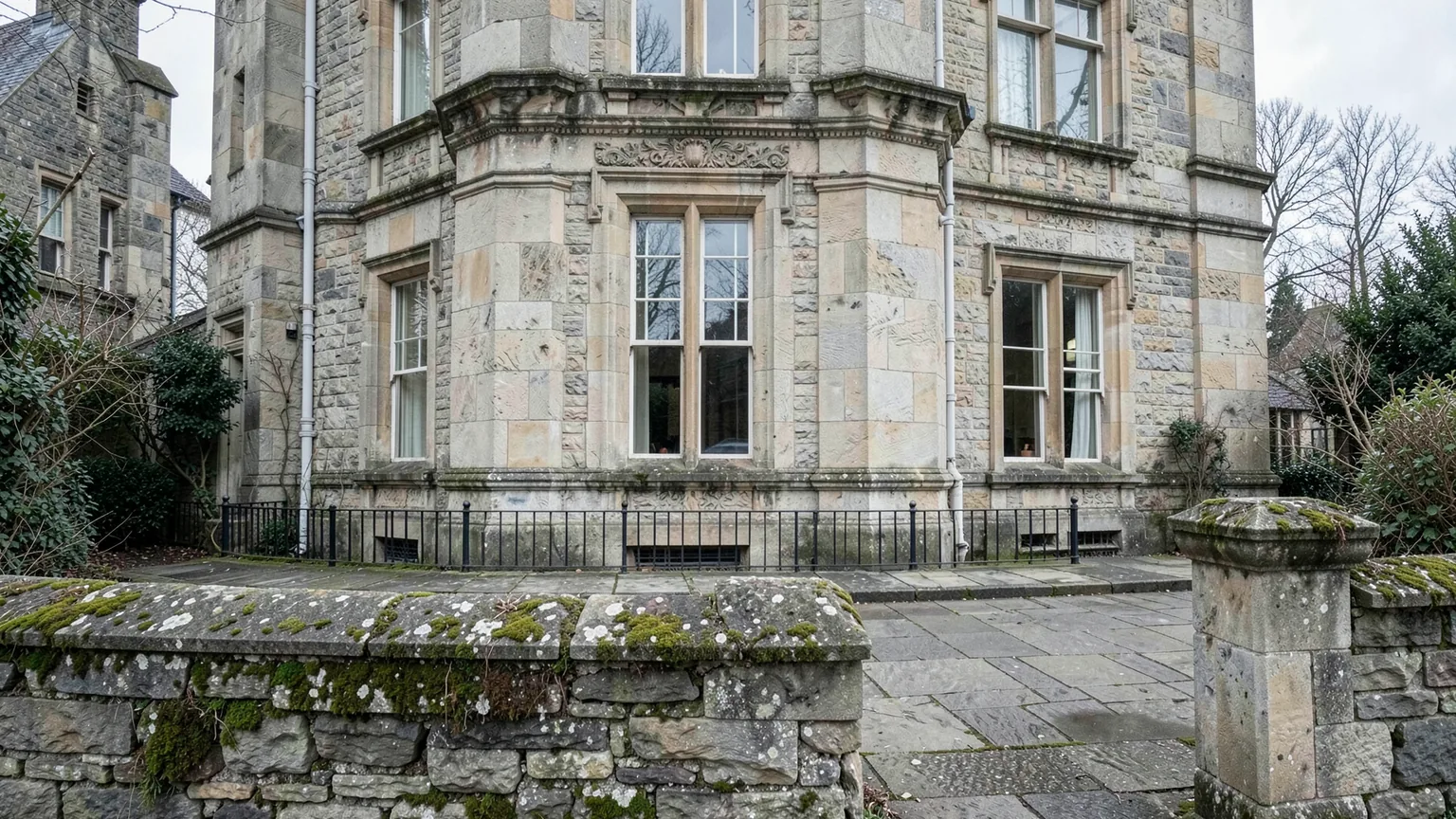
Listing is not limited to the main structure. Section 1 of the Act makes clear that the protection can extend to objects and structures within the curtilage of the building, which is the land that goes with it and is closely connected to its use, where they have formed part of the land since before 1 July 1948, unless the list entry says otherwise. A garden wall, a boundary structure, an outbuilding or a stable block may therefore be protected even though it looks separate from the house. The question of what falls within the curtilage is decided on the facts of each property, and the council is the body that answers it.
National planning policy adds a point that owners often miss. The heritage chapter of the National Planning Policy Framework treats the setting of a heritage asset as part of its significance, and a setting can reach well beyond the curtilage. A demolition plan that looks confined to one building can therefore affect neighbouring structures, views or the character of the setting, and each of those can become a matter for the council. In districts such as Redland or Clifton, the setting question can matter as much as the curtilage question.
The evidence councils expect
Consent to demolish a listed building is not granted for a contractor's convenience. The current National Planning Policy Framework, published in August 2026, requires any harm to or loss of a listed building's significance to have a clear and convincing justification, tells councils to give substantial weight to the building's conservation, with more weight the more important it is, and says the total loss of a grade II building should be exceptional and of a grade I or II* building wholly exceptional. Where a loss is approved, the applicant is expected to record the building in proportion to its importance and deposit that record with the Historic Environment Record. An application that does not explain why the building cannot be kept, repaired or adapted is unlikely to succeed.
The guidance does not give a checklist, so the council decides how much weight each point carries on the facts. In general, an applicant has to explain the significance of the building, the condition it is in and why the harm cannot be avoided. Material that answers those questions, prepared early and submitted with the application, is the strongest protection against an application that is paused while information is gathered.
Where the building is not listed but sits in a conservation area, the rules are different: demolition there is controlled through planning permission, and the same framework asks councils to weigh the loss of an unlisted building that contributes to the area's character according to its relative significance. An owner should confirm which regime applies before choosing a route.
Why a contractor cannot resolve it
Contractors can price a demolition, but they cannot grant consent. A quote that says the job can be done quickly, or that the paperwork will be handled later, is not a substitute for a decision from the council. Owners should be wary of any arrangement where work begins on the basis of an informal conversation with the planning officer, because an informal view is not consent and does not protect the people carrying out the work.
The sensible sequence is to confirm listing status first, establish whether consent is needed and what it will ask for, and only then ask contractors to price the work. A contractor who understands that sequence will ask the owner the right questions, including whether the building is listed, whether it sits within a conservation area and whether any structure on the site is older than the main building. Those questions also help to identify whether other consents are needed, such as the separate prior approval route covered in the guide on prior approval for demolition in Bristol.
Protecting the rest of the site
Even when consent is granted, the work has to be controlled. Under section 8 of the Act, demolition is only authorised once notice of the proposal has been given to the national body responsible for recording historic buildings and that body has had reasonable access to record the building for at least a month after consent, or has confirmed in writing that it has finished recording or does not wish to. The consent will often be subject to conditions about the method of working, the recording of features and the protection of parts of the building that are to be kept. A demolition that removes more than the consent allows is still an offence, so the contractor's method statement should be checked against the consent document line by line before the first strip-out.
Protecting the building fabric in the course of the work is covered in the salvage guide, which explains how careful dismantling can keep historic material intact.
Asbestos and other hazardous materials add a second layer of control. Older buildings can contain materials that must be surveyed and removed before any demolition, and the removal may need a licensed contractor. The guide on asbestos surveys before demolition is the place to start on that survey, and the asbestos abatement service covers the specialist removal that often follows. Where the building is listed, the survey can also identify features that the council may wish to record or retain.
What to do before you ask for a price
If you suspect that a Bristol building may be listed, or that it sits close to one, do not instruct a demolition contractor until the question is answered. Check the council's records, ask the council directly if the answer is unclear, and do not rely on a neighbour's assurance or a contractor's view. If the building is listed, the next step is a consent application, not a quote. If it is not listed, the next step may be a different consent, or none at all.
When the position is clear, you can request comparable demolition quotes through this site. Give each contractor the planning position in writing, including any consent reference, so that the prices are based on the same facts. The basement demolition service page sets out the kind of scope that a contractor will price for a below-ground structure, and the same discipline applies to any listed or curtilage structure on a site.
The protection of a listed building is a public interest, and the law treats its loss as a serious matter. The owner who respects that from the start usually finds the process more predictable, and the one who ignores it is the one most likely to see a programme stopped and a case passed to the enforcing authority.
Sources and further reading
- Planning (Listed Buildings and Conservation Areas) Act 1990, section 7: restriction on works affecting listed buildings (legislation.gov.uk)
- Planning (Listed Buildings and Conservation Areas) Act 1990, section 8: authorisation of works: listed building consent (legislation.gov.uk)
- Planning (Listed Buildings and Conservation Areas) Act 1990, section 9: offences (legislation.gov.uk)
- Planning (Listed Buildings and Conservation Areas) Act 1990, section 1: listed buildings (legislation.gov.uk)
- National Planning Policy Framework, chapter 20: conserving and enhancing the historic environment (GOV.UK)