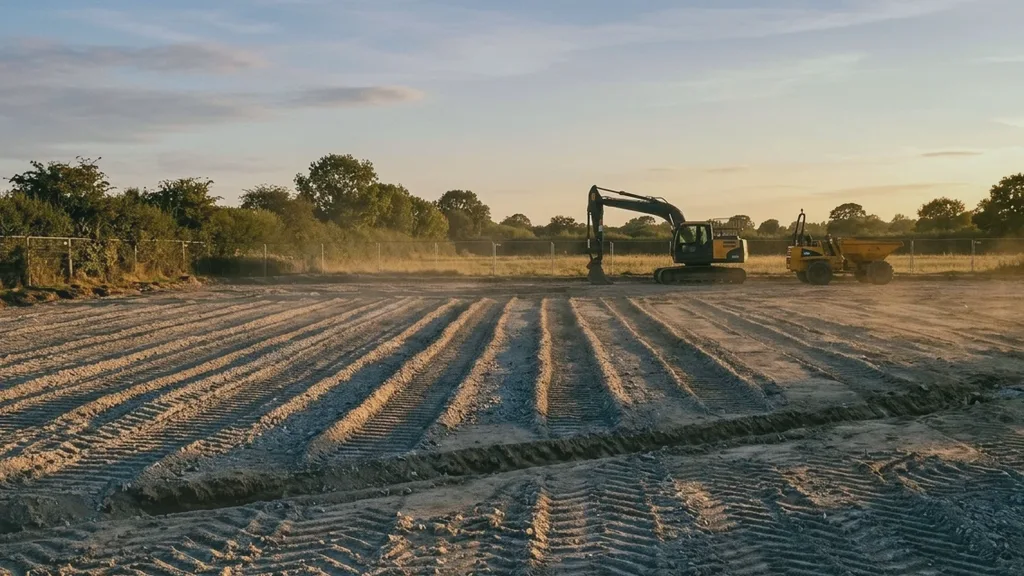
Low golden-hour light raking across a freshly graded demolition plot

BristolDemolition for Local Authorities

Demolition Services for Local Authorities in Bristol

Describe what local authorities need in Bristol, then compare written quotes against the same scope, inclusions, exclusions, and proposed timing.
Compare Quotes

Plan Demolition for Your Property or Organisation

Describe a single property or a wider programme, including who is responsible for design, approvals and contractor appointment.

Step 1 of 8: What type of demolition do you need?

What type of demolition do you need?

What type of demolition do you need?
  • State the property, site, or portfolio context for local authorities
  • Compare written scope, exclusions, timing, and price on the same brief
  • Ask for the credentials and handover records relevant to the job

Comparing quotes for local authorities

Local Authorities in Bristol: what the work involves

Municipal local authorities, city councils, and registered social housing landlords have statutory responsibilities for public health, civic safety, and urban regeneration. When dealing with structurally compromised properties, fire-damaged buildings, or derelict housing estates, public-sector clients need a procurement process that makes scope, competence requirements, insurance evidence, public communications, and decision-making responsibilities clear.

Working with local authorities in Bristol

Local-authority teams can compare tenders against their published procurement standards, project information, and regeneration objectives. Relevant scopes may include: • Decommissioned council offices and public buildings • Multi-storey car parks • Leisure centres and municipal facilities • Low-rise social housing developments • Obsolete depot yards

Dangerous structures following severe fire damage, vehicle collisions, storm damage, or structural movement require the authority’s own incident and statutory decision process. The Building Act 1984 includes dangerous-building powers, but the authority should obtain current legal, building-control, and structural-engineering advice for the facts at hand. A later tender can state the agreed scope, survey information, access constraints, and required competence evidence.

The authority, emergency services, highways team, and appointed advisers should decide whether cordons, traffic measures, surveys, temporary works, or demolition are needed. Any reopening decision should be made through the responsible authority’s process using the appropriate evidence; it should not be promised by a tender platform.

What the work usually involves

Planned public-estate regeneration benefits from clear coordination between procurement, planning, conservation, highways, estates, and community teams. The authority should identify the surveys, ecology advice, asbestos information, pest-management responsibilities, and tree-protection requirements that apply to the site, then include the resulting responsibilities in the tender and programme.

Public safety and community liaison are central when a demolition footprint adjoins schools, high streets, bus stations, or residential estates. The authority can specify the proposed hoarding, access, noise, public-notice, and resident-contact arrangements, then review how each bidder would implement them for the site.

Traffic, haulage, wheel-cleaning, dust, noise, and vibration controls need to reflect the authority’s highway conditions, planning requirements, and project risk assessment. Ask tenderers to identify their proposed controls, monitoring, reporting, and escalation arrangements rather than assuming a standard set of equipment is suitable.

What to look for in a quote

Environmental performance and circular-economy criteria can be built into the evaluation. The authority can require waste-transfer and weighbridge records where applicable, then decide which architectural assets merit survey, retention, storage, or reuse before work starts.

Masonry and concrete may be processed on site or sent to a suitable receiving facility where the material, permissions, and specification allow. Procurement documents should distinguish measured material data from estimates and state the evidence required for any carbon or reuse claim.

From town-centre regeneration projects to dangerous-structure planning, this content helps local-authority teams frame a clearer tender comparison. Compare written competence evidence, scope boundaries, programme assumptions, public communications, environmental records, and handover information against the authority’s own governance and procurement requirements.

Getting quotes for local authorities

For framework or call-off procurement, publish the authority’s route for clarifications, site visits, conflict management, safeguarding requirements, and decision records. Separate the authority’s statutory and operational responsibilities from the contractor’s proposed work. This lets evaluators compare responses against the same brief and preserve an audit trail for later approvals, changes, or community questions.

For heritage, housing, education, or transport-adjacent assets, identify the stakeholder who owns each constraint and the evidence they need before a decision is made. Include the expected handback condition, retained assets, public-realm interfaces, and records format. These details give tenderers a defined public-sector scope without claiming that one provider can determine safety, approvals, or community outcomes.

The authority can also set its review timetable for procurement governance, public notices, member decisions, and contract mobilisation. Tenderers can then identify dependencies without suggesting they control those public decisions. That timetable should identify accountable officers and formal approval points.

Before You Compare

Prepare a clear work brief for local authorities

Measurements, photographs, inclusions, credentials, and handover expectations give each provider the same evidence base.
  • Record the starting point

    Describe the current condition, desired outcome, timing, and the operational requirements for local authorities. Add measurements or photographs where they clarify the request.
  • Spot gaps between quotes

    Compare the written basis of each the work quote: included work, exclusions, specified products, programme, allowances, and payment milestones.
  • Verify before you choose

    Request only evidence relevant to the work: current credentials, suitable insurance, and the written testing, warranty, or handover records included in the quote.

Plan demolition services around your requirements

Use one detailed brief for local authorities, then compare each response for scope, exclusions, schedule, evidence, and price.
Compare Quotes
Illustrative photography

The kinds of work quoted for Local Authorities

These illustrative photographs can help identify visible elements for a brief, but a provider must assess the actual site and scope.

Check the important assumptions for Local Authorities

Use these authored answers to identify what belongs in the enquiry and what still needs confirmation in a provider quote.

Services for Local Authorities

Review the services available in Bristol and choose the guide that best matches the work local authorities need priced.

Start with the service scope

Compare Quotes for Local Authorities

Review written proposals against your brief for local authorities in Bristol and make an unhurried choice.
Step 1 of 8: What type of demolition do you need?

What type of demolition do you need?

What type of demolition do you need?