Useful context for Avonmouth
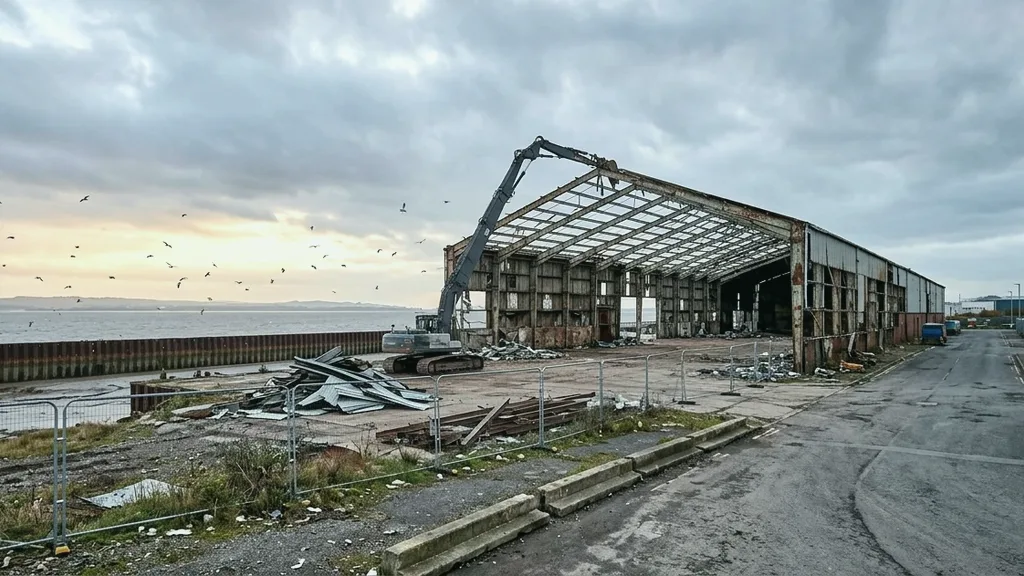
Demolition here is dominated by decommissioning rather than domestic teardown. A warehouse or processing shed reaching the end of its working life typically needs a full environmental review before any plant arrives, because decades of chemical storage, metal processing or fuel handling on Severnside plots has left contamination that a standard clearance would simply spread rather than remove. Asbestos-cement roofing and wall cladding, fitted across the estate's 1960s-80s sheds as standard practice at the time, is another near-universal feature that has to be surveyed and dealt with before the structural frame can come down. Loading bays and tank farms need residual product drained from pipework and certified empty first.
The tidal Severn adds a further constraint that inland Bristol sites rarely face. Much of Avonmouth sits within a recognised flood zone, so foundation removal and any below-ground excavation has to account for groundwater behaviour that shifts with the tide, and waste movement by barge through the dock's lock gates runs to a schedule the tide sets rather than the contractor. Working hours near the St Andrew's Road houses are also tighter than elsewhere on the estate, since that pocket of housing sits close enough to several industrial plots that noise and dust controls have to hold even during a large teardown.