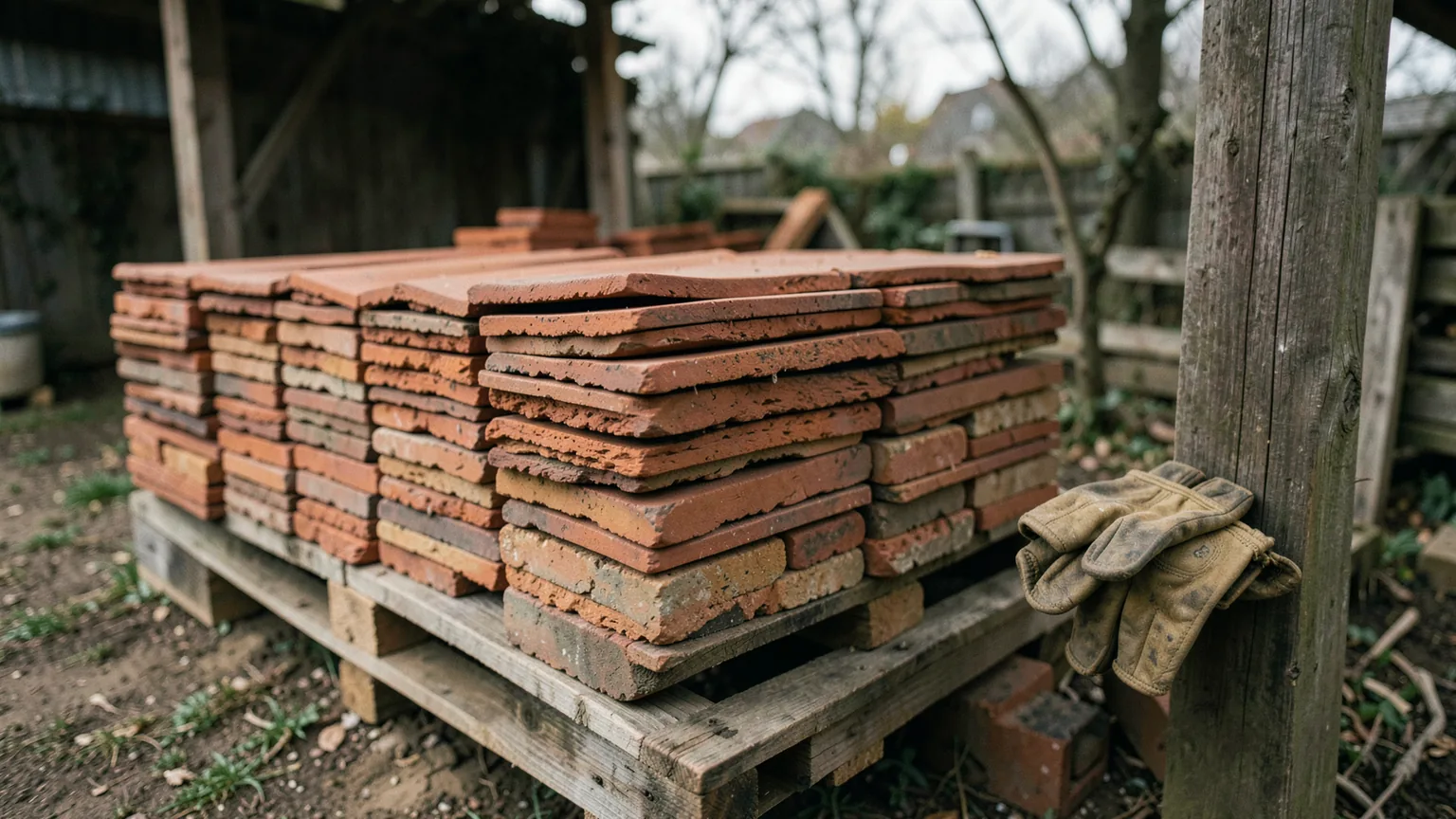
Salvaging materials from Bristol demolition
Reclaiming bricks, slates, timber and sanitaryware from a building before it comes down is a practical choice that more owners in Bristol are considering. The materials have a second life in restoration work and in the reuse market, and a careful removal can keep usable components out of a skip. The trade-off is time and labour. Deconstruction is slower than machine demolition, it needs a crew that knows how to take materials out intact, and it changes the programme the owner has been given. This guide explains what can realistically be salvaged, how careful dismantling differs from machine demolition and how reuse fits into the waste duties that apply to every site.
The honest answer is that salvage works well when it is planned before the contract is signed. A contractor who has been asked to strip a building by hand, and to store and sell the components, will price that work differently from one who is simply asked to clear the site. An owner who wants reuse should say so in writing from the start.
Careful dismantling and machine demolition
Machine demolition is designed to bring a structure down quickly and to sort the debris afterwards. An excavator with a breaker or grab reduces brick, timber and plaster to a mixed pile, and the material that remains is usually suitable only for crushing or disposal. That method is efficient for a structure that has no value to keep and where the access is good enough for plant to work safely.
For a house, the residential demolition service is the usual starting point for a salvage conversation. Careful dismantling reverses the order. The crew removes fixtures, doors, windows, roof coverings and flooring by hand, takes out the timbers with the least damage and lowers bricks from the top of the building rather than letting them fall. The method is slower, and it needs people who can work at height and handle fragile components without breaking them. The HSE construction phase plan guidance is relevant here, because the same principles that govern a normal demolition day still apply. The guidance asks contractors to support structures such as walls, beams, chimney breasts and roofs with props, and to ensure that props are installed by a competent person. A salvage method that disturbs the structure without that support puts people at risk and can ruin the components it was meant to save.
In practice, many jobs use a combination. Upper floors and roofs may be dismantled by hand to recover slates, timber and fittings, while the lower structure is taken down by machine once the valuable material has been removed. The contractor's written method should show which parts are dismantled and which are demolished, so that the owner can see the sequence before work begins.
What can realistically be salvaged
Some materials have a clear reuse market. Clay roof tiles and slates, reclaimed bricks of a suitable age and colour, solid timber joists and boards, cast-iron rainwater goods and period sanitaryware are the items that owners and salvage dealers most often ask about. Their value depends on condition, quantity, size and the local demand for them, and an owner should not assume that any particular item will sell. A dealer's view on the day is the only reliable guide to what will be taken and at what price.
Some materials cannot be salvaged at all. Any component that contains asbestos must be treated under the asbestos rules, and that removes it from the reuse stream entirely. The HSE asbestos FAQ explains that asbestos waste includes contaminated building materials, dust and rubble, and that it must be handled through a licensed disposal route. A survey before the salvage begins is therefore not only a safety step but also a decision about which materials are available to reuse. The guide on asbestos surveys before demolition shows how to commission one.
Other materials may be too damaged to reuse after removal. Brick that has been cracked, timber that has been attacked by rot or fixings that have been bent in the strip-out will go to the waste stream, and the crew should set aside a clear area for those items rather than mixing them with the good stock.
The effect on the programme and the cost
Salvage adds labour time, and the time has to be in the programme. A dismantling crew may take several days to clear a room that a machine would take down in an hour, and the storage of salvaged material on site or off site adds further work. The owner should ask the contractor to show how many days the salvage phase is expected to take, what happens to the stored material and who is responsible for it if it is damaged while it waits to be collected.
The cost of storage is often overlooked. A pile of bricks or a stack of slates on a narrow Bristol street can block access and create a hazard, so the stock needs a secure location. Where the property has a yard, a garden or a clear space at the back, the storage can be arranged there. Where it does not, the contractor may need to remove the material to a secure store, which adds handling and transport. An owner who has not thought about this will find that the cost of salvage can be larger than the value of the material.
Salvage also affects the access plan. Stacked material and temporary storage use space that the plant and skips would otherwise need. The contractor should show how the site will be kept clear and how the exclusion zone will be maintained while the salvage is in progress, because a pile of reclaimed material is a trip hazard as well as an asset.
Reuse within the waste duties
Salvage does not remove the waste duties of whoever produces the waste, which on a contracted job is normally the demolition firm rather than a householder. Under the GOV.UK guidance on managing business waste, a business must keep waste to a minimum by doing everything reasonably possible to prevent, reuse, recycle or recover it, in that order. Reuse therefore ranks above recycling in the waste hierarchy, and a demolition contractor should be able to show that they have considered it before sending material to a skip. That is a sensible reason to ask for a salvage plan even on a job where the owner does not expect much value to be recovered.
Whatever is not reused still has to be classified and disposed of lawfully, wherever the job sits in Bristol. Under the GOV.UK guidance on construction and demolition waste, the waste has to be classified before it is collected, disposed of or recovered, and the codes chosen for the reusable and non-reusable stock should match the destinations the contractor has named. A waste transfer note should be issued for each load of waste that leaves the site, including loads taken to a recycler rather than to a tip, and the contractor should record where any salvaged items went so that the trail is complete.
A salvage plan should therefore record three things: what will be kept, where it will be stored and how the remainder will be classified and taken away. If the contractor cannot describe those three elements, the owner has not yet got a salvage plan.
Deciding whether salvage is worth it
Salvage makes sense when the building holds materials of a suitable age, condition and quantity, when the access and storage allow the material to be handled safely and when the owner or a dealer is ready to take it. It makes less sense when the materials are of low value, when the site cannot store them and when the programme is tight. An owner who wants reuse for environmental reasons can still reach that goal, but the time and labour cost should be explicit in the quote.
Ask each contractor, in a quote request, to price the salvage and the standard demolition separately. That makes it possible to see what the reuse adds to the cost and what the programme looks like with and without it. For most owners, the site clean-up service is the final step after the salvage has been completed and the remaining material has been removed.
If your building is subject to any special restriction, such as listed status, the salvage plan has to respect it. The listed status guide explains the consent position, and the salvage method should be checked against the consent before any stone or timber is removed.